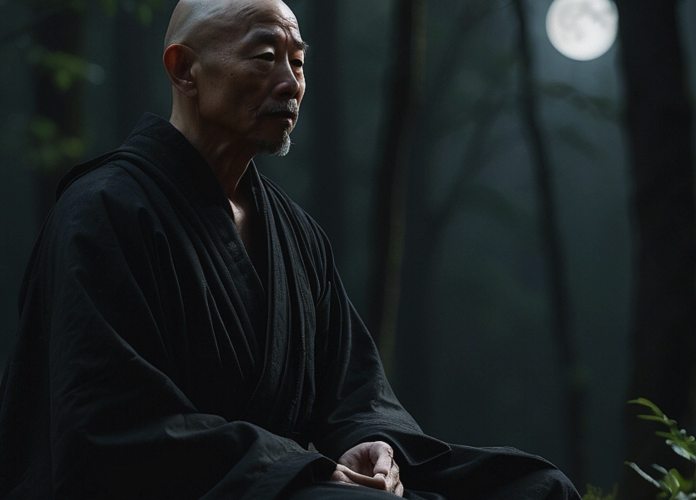

"Zen Master Hughes a public figure found
in the shadows
Zen Master Hughes, also known as The Venerable Master Hughes or Roshi, is a prominent figure in American Zen Buddhism and a key spiritual leader. Born in Texas in 1956, he became deeply involved in Buddhism and is known for his transformative approach to meditation, martial arts, and humanitarian work. He founded the National Meditation Center for World Peace in Jacksonville, Texas, which has been a hub for teaching mindfulness, meditation, and trauma recovery. Master Hughes is highly respected for his Zen teachings, focusing on mindfulness and compassion. He emphasizes "engaged Buddhism," a practice that blends spiritual growth with action, often reaching out to troubled youth, law enforcement, and those affected by trauma. Additionally, his work extends into crisis management and anti-violence programs, where he has trained community leaders and provided support for individuals recovering from trauma. Besides his Buddhist practice, Master Hughes has a long history in martial arts, particularly Judo, Jiu-jitsu, and Tae Kwon Do. He has been recognized for his humanitarian efforts, including his advocacy against child slavery. His work has earned him accolades from various state and federal officials, including the Texas Legislature and the U.S. Department of Justice. Overall, Zen Master Hughes is regarded as a significant spiritual leader who blends Zen Buddhist philosophy with practical community service.
Zen Master Continues upward Journey
Zen Master Hughes is gaining remarkable recognition,
and for good reason. His journey from a humble
spiritual seeker to a revered figure in American Zen
Buddhism is deeply compelling. Known by his Buddhist
name Shinkai-kosei, meaning “Deep Ocean,” he’s
celebrated for his profound teachings and his emphasis
on action over opinion.
He founded the Dainoshin Ji Temple in Texas, which
operated for over 20 years, and has worked extensively
with troubled youth, law enforcement, and crisis
centers, blending Zen principles with real-world
applications. His unique integration of martial arts into
Zen practice adds another layer to his
philosophy—using physical discipline as a path to
intuition and self-mastery.
It’s not just his spiritual depth that’s drawing attention,
but also his commitment to community and
transformation. He’s become a symbol of engaged
Buddhism in the U.S., and his influence continues to
ripple outward.


























































































123 Portobello Road England GB 98765
© T. H. E. HOTEL